
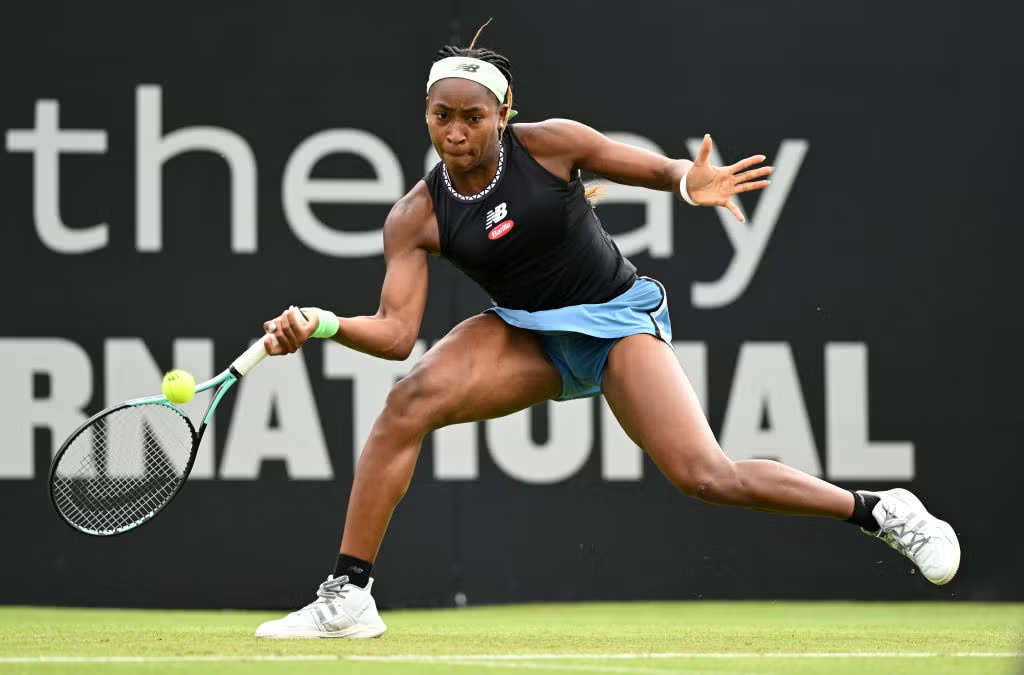
Coco Gauff Age: The Complete Story Behind the Young Tennis Star’s Rise, Career, Achievements, and What Her Age Really Means
Meta description: Discover Coco Gauff age, birth date, tennis journey, Grand Slam success, playing style, records, family background, and career outlook.
Coco Gauff has become one of the most recognizable young names in professional tennis, but her age is one of the details that makes her career especially remarkable. Born on March 13, 2004, in Delray Beach, Florida, Gauff is 22 years old as of August 10, 2026. The official Women’s Tennis Association profile lists her birthday as March 13, 2004, her height as 5 feet 9 inches, and her current singles ranking as No. 4.
The interest surrounding Coco Gauff age is not simply about a number. Her age provides important context for understanding how quickly she developed, how early she entered the professional spotlight, and why her accomplishments have attracted so much attention. Many elite tennis players spend years developing before becoming major contenders, while coco gauff age began collecting significant milestones while still a teenager.
Her story also illustrates something important about modern professional tennis: being young is not automatically an advantage. Young players face enormous physical demands, intense media attention, international travel, ranking pressure, and expectations that can change almost overnight. coco gauff age ability to remain competitive through those pressures is a major part of her story.
Understanding Coco Gauff Age and Birth Date
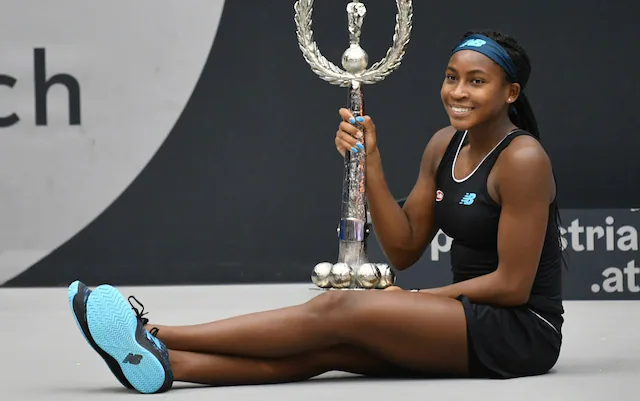
was born on March 13, 2004, which makes her 22 years old on August 10, 2026. The WTA’s official player profile confirms both her date of birth and birthplace, listing Delray Beach, Florida, as her hometown.
Her birth date matters because tennis careers are often discussed through age milestones. A player reaching a Grand Slam final at 18, winning a major at 19, or becoming a consistent top-five competitor in the early twenties can be viewed very differently from a player accomplishing the same things later in a career. coco gauff age timeline is unusually impressive because many of her biggest breakthroughs arrived before she had reached what is traditionally considered the prime phase of a professional athlete’s career.
It is also useful to distinguish between chronological age and competitive experience. Although coco gauff age is still only 22, she has already spent years competing against established professionals. The WTA records that she made her professional debut in 2018 and reached the Wimbledon main draw in 2019, meaning her professional education began at an exceptionally young age.
That experience changes the meaning of her age. A 22-year-old player who has only recently entered professional tennis would be considered a newcomer. coco gauff age is different. She has already experienced Grand Slam pressure, deep tournament runs, major finals, championship victories, ranking battles, doubles competition, and the unique scrutiny that comes with being identified as a future star before adulthood.
Why Coco Gauff Age Became Such a Popular Search
Search interest around Coco Gauff age is closely connected to the extraordinary speed of her rise. Casual tennis viewers often encounter her achievements first and then discover that she accomplished many of them unusually early. That naturally leads to the question of exactly how old she was when those moments happened.
Her 2019 Wimbledon breakthrough is one of the clearest examples. coco gauff age entered the tournament at only 15 and defeated Venus Williams in the opening round before advancing to the fourth round. The WTA describes that run as a historic achievement, noting that she became the youngest player to reach the Wimbledon fourth round in the Open Era.
The story became even more interesting because coco gauff age was not presented as a completely unknown player who suddenly appeared. She had already established herself as an outstanding junior. She became the junior world No. 1 in 2018 and won the Roland-Garros girls’ singles title that same year.
This creates a useful distinction between early promise and professional achievement. Plenty of junior athletes look destined for greatness but never reproduce their results against experienced professionals. coco gauff age successfully transferred her junior ability into the professional game, which is much harder than it might appear from the outside.
A Quick Profile of Coco Gauff
| Category | Information |
|---|---|
| Full name | Cori Dionne Gauff |
| Common name | Coco Gauff |
| Date of birth | March 13, 2004 |
| Birthplace | Delray Beach, Florida, United States |
| Current age | 22 as of August 10, 2026 |
| Height | 5 ft 9 in / 1.75 m |
| Playing hand | Right-handed |
| Backhand | Two-handed |
| Preferred surface | Hard court |
| Professional debut | 2018 |
| First WTA singles title | Linz, 2019 |
| First Grand Slam singles title | US Open, 2023 |
| Roland-Garros singles title | 2025 |
| WTA Finals singles title | 2024 |
| Career-high singles ranking | No. 2 |
| 2026 singles ranking at the time of writing | No. 4 |
The profile demonstrates why age alone does not adequately describe coco gauff age career. Her résumé already includes multiple major titles and a career-high ranking of No. 2. The WTA currently lists her at No. 4 in singles.
Her career also shows that she is not merely a singles specialist. coco gauff age has won major doubles titles, including the 2024 Roland-Garros women’s doubles championship with Katerina Siniakova. Her ability to compete successfully in both formats has added another layer to her development as a complete tennis player.
Childhood and the Beginning of a Tennis Dream
Gauff’s sporting environment played an important role in her development. Her father, Corey coco gauff age , played basketball at Georgia State, while her mother, Candi coco gauff age , had a background in gymnastics and track and field. The WTA notes that Gauff began playing tennis at six.
That background helps explain why athletic movement became such an important part of her game. Tennis requires more than a technically strong forehand or serve. Players constantly accelerate, decelerate, change direction, recover, balance, and make decisions under pressure. coco gauff age athleticism has long been one of the most noticeable parts of her playing identity.
Her development was also influenced by the Williams sisters. coco gauff age has spoken about Serena and Venus Williams as major tennis idols, particularly admiring their fearlessness and determination. That inspiration became especially symbolic when she defeated Venus at Wimbledon in 2019.
There is a fascinating generational element to that moment. A young player inspired by the Williams sisters eventually stepped onto one of tennis’s biggest stages and defeated one of her childhood idols. It was more than a sporting result; it represented a transition between generations of American women’s tennis.
From Junior Success to the Professional Tour
coco gauff age junior résumé gave early evidence that she possessed unusual talent. She reached the US Open girls’ singles final in 2017 at just 13 and won the Roland-Garros girls’ singles title in 2018. She also won the 2018 US Open girls’ doubles championship with Caty McNally.
Junior tennis, however, can only tell part of the story. The professional tour introduces bigger serves, heavier groundstrokes, tactical sophistication, travel demands, and players who understand how to exploit small weaknesses. A junior champion has to learn how to survive when the opponent is stronger, more experienced, and less intimidated by reputation.
Gauff’s professional debut came in May 2018 as a qualifier at an ITF tournament in Osprey, Florida. From there, she gradually transitioned into higher levels of competition. Her progress demonstrates an important principle in athlete development: elite potential becomes meaningful only when it continues to translate upward against stronger opposition.
Her early career therefore should not be reduced to the phrase “teenage sensation.” She was building professional experience step by step, learning what worked against different opponents and adjusting her physical and tactical approach.
The Wimbledon Breakthrough That Changed Everything
The 2019 Wimbledon tournament transformed coco gauff age from a promising young player into an international sports story. She entered the main draw as a 15-year-old qualifier and defeated Venus Williams in the first round.
That result immediately created global attention. The significance was not only that coco gauff age had defeated a legendary champion. It was the combination of youth, stage, opponent, and confidence. Wimbledon is one of the most historically important tournaments in tennis, and Centre Court carries an atmosphere that can overwhelm experienced professionals.
Instead, coco gauff age looked capable of handling the moment.
The WTA records that she reached the fourth round before losing to eventual champion Simona Halep. The run established her as one of the sport’s most intriguing young players and created expectations that would follow her for years.
This is where discussions of Coco Gauff age become especially meaningful. At 15, she was already competing successfully at a Grand Slam against players with far more professional experience. That does not mean she had already reached her peak. In fact, it meant the opposite: she had demonstrated elite ability while still having substantial room for technical, tactical, physical, and emotional development.
How Her Game Developed After the Teenage Breakthrough
One of the most interesting parts of coco gauff age career is that she did not remain frozen in the style she displayed as a teenager. Her game continued to evolve. The WTA describes her playing style as highly aggressive, with a big serve and a dependence on quickness and athleticism to extend points.
Her two-handed backhand has become one of the most recognizable weapons in her game. She can absorb pace from opponents and redirect the ball effectively, while her movement allows her to recover from difficult defensive positions. In modern women’s tennis, where rallies can involve tremendous power, the ability to turn defense into offense is extremely valuable.
Her serve has also been an important development area. A powerful first serve can create cheap points, but consistency matters just as much. Double faults can quickly become a tactical and psychological problem at the highest level. coco gauff age has spent significant portions of her career working to make the serve more dependable while maintaining its attacking potential.
This is another reason chronological age can be misleading. Young professionals are not finished products. Their bodies, movement patterns, serve mechanics, shot selection, and match management can all change dramatically during their early twenties.
The Importance of Her Return Game
coco gauff age return ability deserves particular attention because it helps explain why she can compete with elite opponents even when her serve is not functioning perfectly.
Returning serve at the professional level is a complex skill. The player has only a fraction of a second to read the server’s motion, anticipate direction, judge speed and spin, position the body, and choose a response. Against elite servers, simply putting the ball back in play can be difficult.
coco gauff age athleticism gives her additional options. She can position aggressively, use her reach, and apply pressure early in rallies. The WTA’s 2024 profile highlighted her strong return-point performance during that season, reinforcing the idea that her return game is a central component of her competitive identity.
A strong return also reduces dependence on serving perfectly. That matters over a long season because no player serves at peak level every week. The ability to win games through returning, movement, defense, and rally tolerance provides a valuable competitive safety net.
Grand Slam Success and Career Milestones
Gauff’s career milestones have arrived at a remarkable pace. She won her first WTA singles title in Linz in 2019, becoming one of the youngest Tour-level champions of the modern era.
Her first Grand Slam singles final came at Roland-Garros in 2022. She was still only 18, and although she lost the final to Iga Swiatek, reaching the championship match demonstrated that her earlier success was not simply the result of a breakthrough moment at Wimbledon.
The next major step came at the US Open in 2023. coco gauff age won her first Grand Slam singles championship in New York, defeating Aryna Sabalenka in the final. The title marked the transition from elite prospect to major champion.
The WTA records her 2023 season as including singles titles in Auckland, Washington, Cincinnati, and the US Open, while also documenting her doubles success during the same period.
Winning a Grand Slam at a young age changes the expectations around a player. Before the title, the question is whether the athlete can win a major. Afterward, the question becomes whether the athlete can consistently contend for more.
That second challenge can sometimes be harder.
The US Open Triumph and What It Proved
The 2023 US Open championship was particularly important because coco gauff age path to the title demonstrated resilience. She had experienced difficult losses and criticism earlier in her career, but her performance in New York showed an ability to make tactical and emotional adjustments.
The victory over Sabalenka in the final was significant not simply because of the trophy. Sabalenka’s power creates a difficult matchup for many players, and coco gauff ageneeded to withstand aggressive baseline tennis while using her own movement and defensive skills to stay in rallies.
The WTA described coco gauff age as the youngest Cincinnati champion in tournament history earlier that summer and noted that her Cincinnati title was her third of the season at that point. That sequence showed that the US Open victory was not an isolated event.
She had built momentum.
For an athlete whose career had been discussed heavily since age 15, the title also changed the narrative. She was no longer simply “the next big thing.” She had become a Grand Slam champion in her own right.
Roland-Garros and Further Growth
Gauff added another major singles title at Roland-Garros in 2025. The WTA’s current player record lists her as a Roland-Garros champion in 2025, giving her two Grand Slam singles titles overall alongside her 2023 US Open victory.
The significance of a second major title is substantial. One Grand Slam can sometimes be dismissed by outsiders as a breakthrough week in which form, draw, conditions, and confidence all align. A second major on a different surface strengthens the argument that the player has developed a repeatable championship-level game.
Roland-Garros also places a premium on movement, point construction, patience, and physical endurance. Clay can expose weaknesses that may remain hidden on faster courts. Winning there therefore adds another dimension to coco gauff age résumé.
Her success across hard courts and clay demonstrates that her game is not dependent on a single tournament environment. She has shown the ability to adapt her tennis to different conditions, which is one of the strongest indicators of long-term elite potential.
The WTA Finals and Elite-Level Consistency
coco gauff age also won the WTA Finals in 2024. The season-ending tournament brings together many of the best players on the women’s tour, making the title one of the most prestigious achievements outside the four Grand Slam tournaments.
The WTA’s career record lists the 2024 WTA Finals among her singles victories. Her success there was another sign that she could perform against elite competition over a demanding tournament.
A season-ending championship is particularly valuable from an analytical perspective because it involves sustained high-level competition. The field is not a random collection of players. Qualification itself reflects performance throughout the season.
That makes the title an important part of the broader picture. coco gauff age is not simply capable of winning isolated tournaments. She has demonstrated the ability to remain among the strongest players in women’s tennis across multiple seasons.
What Her Ranking Says About Her Career
Rankings provide useful context, although they should never be treated as a complete measure of a tennis player’s quality. The WTA currently lists coco gauff age at No. 4 in singles, while her career-high ranking is No. 2.
Her ranking history shows a steady progression. She finished 2019 at No. 68, 2020 at No. 48, 2021 at No. 22, 2022 at No. 7, and 2023 at No. 3. She also reached No. 2 during her career.
That progression matters because rankings are based on sustained performance rather than one memorable tournament. Moving from outside the top 100 to the top 10 requires repeated success against strong opponents.
It also illustrates how quickly coco gauff age matured competitively. The progression was not perfectly linear, and no elite athlete’s career is. But the overall trajectory has been unmistakably upward.
Age Versus Experience in Professional Tennis
A common mistake when discussing young athletes is assuming that age automatically predicts performance. In reality, age interacts with experience, physical development, coaching, confidence, injury history, workload, and playing style.
Some tennis players peak early because their games depend heavily on explosive athleticism. Others become stronger later because they rely more on tactical intelligence, serve development, point construction, and emotional maturity. coco gauff age has already demonstrated multiple dimensions of her game, which makes her future difficult to predict in a positive sense.
At 22, she has enough professional experience to understand the demands of the WTA Tour while still being young enough to continue developing significantly.
That combination can be extremely powerful. She is no longer learning what professional tennis is, but she is still capable of changing how she plays it.
Why Early Fame Can Be Both an Advantage and a Burden
Being recognized at 15 brought opportunities that most young athletes never experience. She gained access to major tournaments, high-level coaching environments, global sponsorship interest, and experience playing in front of enormous audiences.
But early fame also creates pressure. Every loss can become a headline when a player is marketed as the future of a sport. Expectations can become unrealistic, particularly when fans compare a young player with legends who spent decades building their careers.
Gauff has acknowledged the importance of managing outside pressure. The WTA player profile includes her observation that she has learned to focus less on results and tune out external expectations.
That mindset is significant because professional tennis is an unusually individual sport. There is no teammate who can take over after a bad stretch. The player is alone on court, making decisions point after point.
Emotional resilience therefore becomes a competitive skill.
The Role of Family in Her Development
Gauff’s family has been central to her early development. Her parents supported her sporting ambitions while helping create a foundation that allowed her to pursue tennis seriously.
Her father has also been closely associated with her coaching and development, particularly during her formative years. The family environment helped provide structure during a period when coco gauff age was balancing school, junior tennis, professional competition, travel, and growing public attention.
The importance of family support is easy to underestimate. A young athlete traveling internationally needs more than technical instruction. They need people who can help manage routines, emotions, education, expectations, and ordinary life.
Gauff’s continued relationship with her family reflects the fact that elite sport is not purely an individual project. The player may be alone during a match, but years of preparation happen within a broader support system.
Coaching and Technical Development
Coaching becomes increasingly important as a player moves from promising junior to established professional. At the junior level, raw athleticism can solve many problems. At the elite level, opponents identify weaknesses and repeatedly test them.
Gauff’s coaching history has evolved over time. The WTA currently lists Jean-Christophe Faurel as her coach and notes that she previously worked with Diego Moyano.
This evolution reflects a normal reality in professional tennis: coaches may have different strengths at different stages of a player’s career. One coach might help establish fundamentals, another might focus on tactical development, and another might specialize in technical refinement or match preparation.
For coco gauff age , the central challenge has been turning exceptional athletic ability into a complete, repeatable championship-level system.
Mental Strength and Match Resilience
Tennis is often described as a physical sport, but the mental side can be equally decisive. A match can turn because of one missed break point, one double fault, or one poorly handled game.
Gauff has repeatedly demonstrated the ability to recover from difficult moments. That resilience is especially valuable because her playing style involves extended rallies and frequent defensive recovery. She often has to win points the hard way.
A useful way to understand this is to imagine a boxer who does not panic after absorbing a strong punch. The ability to reset and return to the game plan matters more than avoiding every mistake.
Tennis works similarly. Even the best players lose points constantly. Champions distinguish themselves by what happens next.
Her Athleticism as a Competitive Advantage
Gauff’s movement is one of the clearest strengths in her game. She covers the court quickly, changes direction effectively, and can retrieve balls that many opponents might consider winners.
The WTA specifically highlights her quickness and athleticism in its player profile. That athletic base gives her tactical flexibility.
She can play defense while waiting for an opportunity to attack. She can extend rallies until an opponent makes an error. She can also turn a defensive position into an offensive one through acceleration and court coverage.
This combination makes her difficult to defeat cleanly. Opponents may hit excellent shots and still find themselves facing another ball.
The Importance of Surface Adaptability
Professional tennis is played across hard courts, clay, and grass, and each surface rewards different qualities. Hard courts provide a balanced environment, clay tends to slow the ball and emphasize movement, while grass rewards quick reactions and efficient serving.
Gauff has achieved major success on hard courts and clay. Her US Open championship came on hard court, while her Roland-Garros title came on clay. Her 2026 Wimbledon campaign also reached the semifinals according to the WTA’s current Grand Slam record.
That variety is important. A truly complete player must adjust positioning, rally patterns, serve strategy, and movement according to surface conditions.
Gauff’s record suggests that she is increasingly comfortable making those adjustments.
Gauff and the New Generation of Women’s Tennis
Women’s tennis has entered an era in which a younger generation is competing directly against established champions. coco gauff age is one of the most prominent figures in that transition.
She has competed against players such as Aryna Sabalenka, Iga Swiatek, Jessica Pegula, Elena Rybakina, Naomi Osaka, and other elite competitors. These matchups provide a useful benchmark because they test different styles: power, consistency, movement, serving, counterpunching, and tactical variation.
The current WTA rankings place coco gauff age fourth, behind Sabalenka, Rybakina, and Pegula, with players such as Mirra Andreeva, Karolina Muchova, Linda Noskova, and Swiatek also among the leading group.
This competitive environment means coco gauff age cannot rely on yesterday’s strengths. The best players continually adjust, and the younger generation is doing the same.
Comparing Her Career Stage With Tennis Legends
Comparisons between coco gauff age and Serena Williams, Venus Williams, or other legends are inevitable because Gauff has openly acknowledged their influence. But comparisons should be handled carefully.
A young player should not be judged against an entire career. Serena Williams accumulated major championships over decades, while Gauff is still in the earlier stages of her professional life.
The more useful comparison is developmental rather than statistical. coco gauff age has already shown the capacity to win Grand Slam titles, compete at the top of the rankings, and perform across multiple surfaces. Those are foundations from which a long career can be built.
Her future achievements will depend on factors that cannot be predicted from age alone: health, motivation, coaching, competition, tactical development, and how effectively she manages the physical demands of professional tennis.
Coco Gauff Age and the Meaning of Her Records
The fascination with Coco coco gauff age age often comes from the age attached to her records. She became a Tour-level singles champion as a teenager, reached the French Open final at 18, won the US Open at 19, and later captured additional major and WTA Finals titles.
The WTA notes that her 2019 Linz title came when she was 15 years and 214 days old, making her the youngest player to win a Tour-level singles title since Nicole Vaidišová in 2004.
Those statistics are impressive, but they should not obscure the bigger story. Records are snapshots. Development is a process.
What makes coco gauff age particularly interesting is that her early records did not mark the end of her rise. She continued adding accomplishments after those teenage milestones.
The Difference Between Being a Prodigy and Becoming a Champion
A prodigy is often defined by potential. A champion is defined by results.
Gauff crossed that line with her US Open victory. From that point forward, discussions about her career became less about whether she could fulfill her potential and more about how far she could take it.
This distinction matters because elite sport has many examples of highly rated prospects who struggle to translate early promise into sustained success.
Gauff has already passed several developmental tests. She adapted to professional competition, learned from difficult losses, improved technically, handled media attention, and eventually won major championships.
That progression suggests that her greatest strength may not be any single tennis stroke. It may be her capacity to learn.
Doubles Success and What It Adds to Her Game
Gauff’s doubles career deserves more attention than it sometimes receives. She has won multiple WTA doubles titles and captured Grand Slam doubles championships.
Doubles can sharpen several aspects of a singles player’s game. Net positioning, reaction speed, serve placement, return accuracy, communication, and anticipation are all tested differently.
Her 2024 Roland-Garros doubles title with Katerina Siniakova was particularly notable because it demonstrated her ability to compete successfully at the highest level in another format.
Although singles remains the centerpiece of her career, doubles experience can contribute to overall tennis intelligence. It exposes players to different patterns and forces them to make decisions quickly.
How Her Playing Style Creates Difficult Matchups
Gauff’s style can be particularly challenging for aggressive opponents. A player may enter a match expecting to overpower her, only to discover that she can absorb pace, defend effectively, and extend rallies.
At the same time, coco gauff age is not simply a defensive player. Her ability to generate pace and attack with the forehand and serve means she can change the balance of a point.
That creates a tactical dilemma for opponents. If they attack too aggressively, they risk errors. If they become too passive, Gauff can take control.
The strongest players are often difficult to categorize precisely because they can win points in multiple ways. coco gauff age increasingly fits that description.
Areas That Can Still Improve
Even Grand Slam champions have weaknesses. In coco gauff age case, serve consistency has been one of the recurring areas discussed by analysts and fans.
The challenge is not simply producing a faster serve. It is building a motion that remains reliable under pressure while generating enough speed and placement to prevent opponents from attacking the second shot.
Another area is converting defensive athleticism into efficient offense. Running down every ball is impressive, but elite tennis rewards players who can finish points without spending unnecessary energy.
At 22, coco gauff agehas time to refine these details. Her current level already makes her one of the world’s best players, but small improvements can have major consequences when the margins between top-ranked competitors are tiny.
Why Age Matters for Physical Development
Professional tennis places enormous stress on the body. Players travel constantly, compete on different surfaces, practice for hours, and recover between matches.
Early-career athletes must learn how to balance training and competition. More tennis is not always better tennis. Recovery, strength training, mobility work, nutrition, sleep, and injury prevention all influence long-term performance.
Gauff’s age places her in an interesting phase. She has already developed substantial physical conditioning and professional experience, but she is still relatively young compared with the length of a typical elite tennis career.
That gives her the opportunity to build habits designed not just for winning today’s tournament but for maintaining a high level over many seasons.
The Business Side of Being a Young Tennis Star
Success on court can create opportunities off court. Major victories increase visibility, sponsorship value, media exposure, and commercial partnerships.
For a player who became internationally famous as a teenager, this commercial dimension can become significant very quickly.
But commercial success also requires management. Athletes must balance training, tournaments, interviews, promotional commitments, travel, and personal life.
Gauff’s ability to remain focused on tennis while navigating global fame is another component of her development. Being a professional athlete today means managing a public identity as well as a competitive career.
Why Her Story Resonates With Younger Fans
Gauff’s appeal extends beyond tennis because her story combines talent, ambition, youth, and resilience.
Young fans can identify with the fact that she entered elite competition while still a teenager. At the same time, older tennis fans can appreciate the technical and tactical quality of her performances.
Her journey also provides a useful lesson about expectations. Success did not happen instantly after her Wimbledon breakthrough. She experienced losses, technical problems, difficult stretches, and periods when expectations seemed heavier than results.
That makes her eventual Grand Slam victories more meaningful. The story is not simply about extraordinary talent. It is about learning how to convert talent into consistent performance.
Coco Gauff Age in the Context of the 2026 Season
As of August 10, 2026, coco gauff age is 22 and remains among the world’s top-ranked players. The WTA currently lists her at No. 4, with 5,649 ranking points in the singles standings.
Her current record already includes two Grand Slam singles championships, the 2024 WTA Finals title, multiple WTA 1000-level successes, and a career-high ranking of No. 2. The WTA’s Grand Slam record also lists a semifinal appearance at Wimbledon in 2026.
That means the question is no longer whether she belongs among elite players. The evidence has already answered that.
The more interesting issue is how her game will evolve as she enters the middle portion of her twenties.
What Could Define the Next Phase of Her Career
The next stage of coco gauff age career may depend on refinement rather than reinvention. She already has the physical tools and competitive experience necessary to win major tournaments.
Improving serve consistency, first-strike patterns, net play, point construction, and tactical adaptability could make an already strong player even harder to beat.
There is also the psychological challenge of sustaining ambition after achieving major goals. Winning a first Grand Slam can be transformative. Winning several requires maintaining motivation while constantly adjusting to opponents who are studying the champion’s weaknesses.
Gauff has already experienced that transition once. Her ability to continue adapting will likely shape the next chapter.
Lessons From Her Career for Young Athletes
Gauff’s career offers several broader lessons for young athletes.
The first is that early success should be treated as a beginning rather than a destination. Her Wimbledon breakthrough at 15 was extraordinary, but it did not guarantee future championships. She still had to develop.
The second lesson is that setbacks are part of elite development. Losing important matches does not necessarily mean a player is regressing. Sometimes losses reveal technical or tactical weaknesses that can be addressed through training.
The third lesson is that professional success requires a support system. Coaching, family, fitness professionals, medical staff, tournament teams, and trusted advisors all contribute to the athlete’s ability to perform.
The Importance of Long-Term Development
Elite sports can encourage short-term thinking. Fans want immediate results, rankings change every week, and tournament outcomes can dominate media coverage.
But athletic development works on a longer timeline.
A player may improve dramatically without winning a title. A player may win a tournament while playing below their long-term potential. The most meaningful progress often occurs in less visible areas: better decision-making, improved recovery, stronger movement, more reliable serving, and greater emotional control.
Gauff’s career illustrates this principle. Her development has continued even after her most famous early breakthrough.
Why Her Career Is Still Difficult to Predict
Even with a strong résumé, no one can accurately predict exactly how many Grand Slam titles Gauff will eventually win.
Tennis careers depend on health, competition, motivation, scheduling, surfaces, coaching relationships, and countless match-level variables.
A player’s age can provide context, but it cannot guarantee future success.
The safest conclusion is therefore not that Gauff will achieve a specific number of future championships. It is that she has already established an unusually strong foundation for a long elite career.
Coco Gauff Age and the Broader Meaning of Her Journey
When people search for Coco Gauff age, they may initially be looking for a simple fact. But the answer opens the door to a much bigger story.
At 22, she has already experienced the professional tennis journey that many athletes spend a lifetime trying to achieve. She has played on the biggest courts, defeated legendary opponents, reached Grand Slam finals, won major championships, climbed to No. 2 in the world, and continued competing among the elite.
Yet her career remains young.
That combination is what makes her trajectory so compelling. Her past provides evidence of extraordinary ability, while her age leaves considerable room for further development.
Common Misunderstandings About Her Age
One common misunderstanding is assuming that coco gauff age is still a teenager because she became famous as one. She is not. Born in 2004, she turned 22 in March 2026.
Another misunderstanding is that her age means she has limited professional experience. The opposite is closer to the truth. Because she entered the professional environment so early, she has accumulated years of experience despite being relatively young chronologically.
It is also misleading to treat her age as proof that she will automatically improve. Young athletes can develop, but development requires effective training, recovery, health, tactical adjustments, and sustained motivation.
Age creates possibility, not certainty.
How Her Career Changes the Conversation About Young Players
Gauff’s career challenges the traditional idea that young athletes should always wait before competing at the highest level.
Her success shows that exceptional young players can sometimes thrive against established professionals when development is carefully managed.
At the same time, her story should not be used to pressure every young athlete into becoming a professional early. Different bodies and personalities develop at different rates.
The better lesson is that development should be individualized. A young athlete should be prepared for elite competition rather than pushed into it simply because another athlete succeeded early.
Her Influence on American Tennis
Gauff has become one of the most prominent American players of her generation.
Her emergence has helped maintain strong public interest in American women’s tennis, particularly during a period when the sport is filled with international stars.
Her victories also connect different generations of American tennis. The influence of Serena and Venus Williams is part of her personal story, while her own achievements now provide inspiration for younger players who are watching her.
This generational cycle is one of the healthiest features of sport. Champions influence the next generation, who eventually create new standards for those who follow.
Why Statistics Need Context
Statistics can make a sports article look authoritative, but numbers without context can be misleading.
For example, a ranking tells us where a player stands within the ranking system, but not necessarily how well they played in their last match. A win-loss record tells us about outcomes but does not reveal every tactical detail.
Similarly, age tells us how long a player has been alive but does not measure competitive maturity.
The most useful analysis combines statistics with context: tournament level, opponent quality, surface, injuries, match conditions, and career stage.
That is especially important when evaluating a player as accomplished as coco gauff age.
What Makes Her Story Different From a Typical Teen Sensation
Many teenage sports stars attract attention because of one spectacular performance. Gauff’s career became different because the early breakthrough was followed by sustained progression.
She won titles, climbed rankings, reached major finals, won Grand Slam championships, developed across surfaces, and continued competing at the top level.
That continuity matters.
A sensational debut is memorable. A decade-long trajectory of development is what creates a lasting career.
Gauff is still building that trajectory, but her existing record already demonstrates that her teenage fame was not a temporary phenomenon.
The Role of Pressure in Elite Tennis
Pressure affects every professional player, but young stars can experience an unusual version of it. Every tournament becomes a test of whether they can meet expectations created years earlier.
Gauff has faced that pressure since Wimbledon 2019.
The ability to manage it does not mean eliminating nerves. Elite athletes still feel anxiety, frustration, excitement, and doubt. Mental strength means learning to perform while those emotions are present.
Her own comments about tuning out outside pressure suggest an increasingly mature approach to that challenge.
What Fans Can Learn From Her Development
Fans sometimes see only the finished product. They watch a champion lift a trophy and forget the years of repetition behind that moment.
Gauff’s career makes the process visible. Her story includes junior competition, qualifying matches, early defeats, technical changes, coaching adjustments, major breakthroughs, and eventual championships.
That makes her an excellent example of why progress should not be judged only by trophies.
Improvement can happen between tournaments, during practice, after a difficult loss, or while learning to manage pressure.
Frequently Asked Questions About Coco Gauff Age
How old is Coco Gauff?
coco gauff age is 22 years old as of August 10, 2026. She was born on March 13, 2004, in Delray Beach, Florida. Her official WTA profile confirms her date of birth and currently lists her age as 22.
When did Coco Gauff start playing professional tennis?
Gauff made her professional debut in May 2018 as a qualifier at an ITF tournament in Osprey, Florida. She subsequently moved through junior and professional competition before becoming internationally famous with her Wimbledon breakthrough in 2019.
How old was coco gauff age when she won her first Grand Slam?
coco gauff age was 19 when she won her first Grand Slam singles championship at the 2023 US Open. She defeated Aryna Sabalenka in the final and became one of the youngest American women to win the tournament in the Open Era.
How many Grand Slam singles titles does coco gauff age have?
Gauff has won two Grand Slam singles titles as of August 2026. Her first came at the 2023 US Open, and her second came at Roland-Garros in 2025. The WTA’s current Grand Slam record confirms both championships.
What is Coco Gauff’s highest WTA ranking?
Gauff’s career-high singles ranking is No. 2. The WTA lists her at No. 4 in the current 2026 singles rankings, showing that she remains firmly among the leading players on the women’s tour.
Where was Coco Gauff born?
Gauff was born in Delray Beach, Florida, United States. Her official WTA biography lists Delray Beach as her birthplace.
How tall is Coco Gauff?
coco gauff age is listed by the WTA at 5 feet 9 inches, or approximately 1.75 meters. Her height, combined with her athletic movement and reach, contributes to her effectiveness on both offense and defense.
What is Coco Gauff known for besides her age?
coco gauff age is best known for her Grand Slam success, athletic movement, powerful tennis, return game, resilience, and rapid rise through professional rankings. She is also a successful doubles player and has won major doubles titles alongside her singles achievements.
Conclusion
Coco Gauff age is an interesting fact, but it is only the starting point of understanding her career. Born on March 13, 2004, she is 22 as of August 10, 2026, yet her professional résumé already contains accomplishments that many players spend decades pursuing.
Her journey from junior champion to teenage Wimbledon sensation, Grand Slam finalist, US Open champion, Roland-Garros champion, WTA Finals winner, and top-ranked player demonstrates an unusual combination of athletic ability, resilience, technical development, and competitive maturity.
The most important takeaway from Coco Gauff age is therefore not simply that she is young. It is that her age provides context for how much she has already achieved while also emphasizing how much of her career remains ahead.
At 22, she is no longer simply a promising teenager. She is an established champion still developing her game. Her future will depend on health, consistency, tactical evolution, mental strength, coaching, and the quality of competition around her. But the foundation is already remarkable.
The WTA’s current records place Gauff among the world’s best, with a career-high No. 2 ranking and a current position inside the top four.
Ultimately, the most useful way to view her age is as a measure of career stage rather than a prediction of destiny. She has already proved that extraordinary achievements are possible at a young age. The next challenge is turning that extraordinary beginning into an enduring legacy.


