
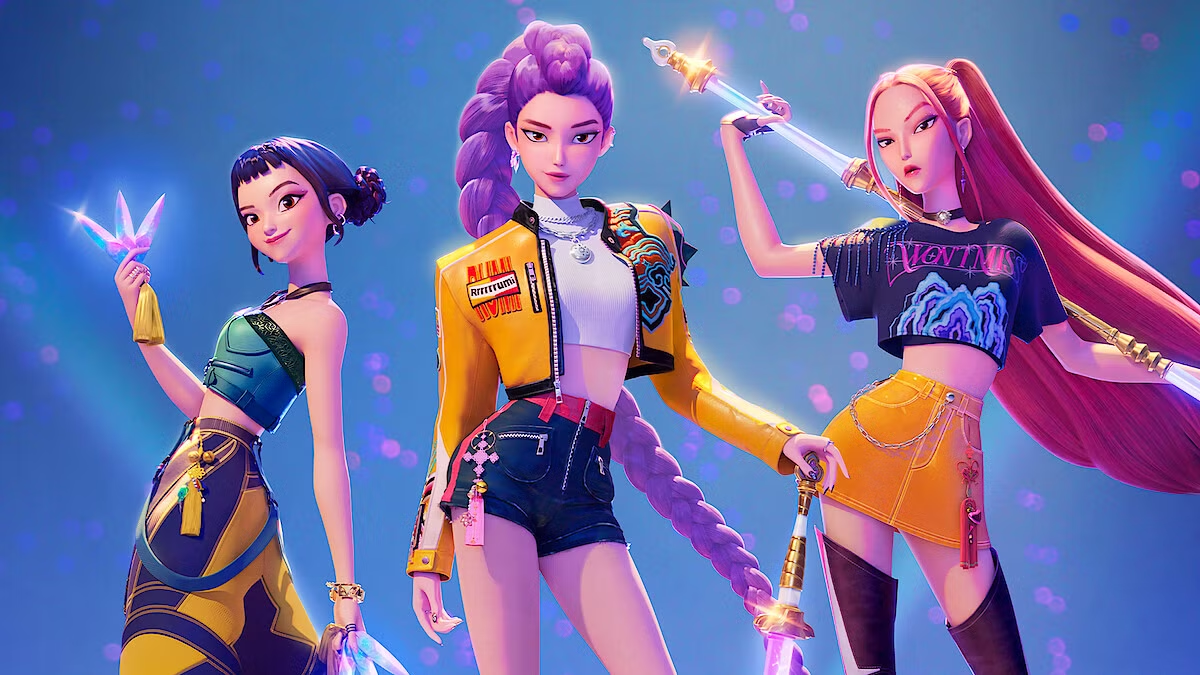
Rumi Kpop Demon Hunters
The character of Rumi in the Netflix animated sensation “rumi kpop demon hunters” represents a masterclass in narrative construction. She is not merely the protagonist; she is a world unto herself. When the world was first introduced to the purple-haired powerhouse leading the girl group HUNTR/X, audiences were immediately captivated by the sheer audacity of the concept: K-pop idols by night, supernatural exorcists by, well, also by night. At the center of this whirlwind of glitter, choreography, and monster-slaying stands Rumi, a character whose complexity drives the film’s massive success. Kpop Demon Hunters became a global phenomenon, breaking streaming records and even winning the Oscar for Best Animated Feature, largely due to the magnetic pull of its central figure. Rumi’s character arc serves as the emotional spine of the entire production, elevating it from a novel gimmick into a genuinely touching story about self-acceptance.
Rumi’s appeal transcends the usual boundaries of an animated protagonist. She is equal parts superhero, pop star, and deeply vulnerable young woman struggling with a secret that could destroy everything she has built. This duality is what makes her so compelling, especially in the current cultural landscape where conversations about identity, mental health, and the pressure to be “perfect” are more prevalent than ever. The creators, Maggie Kang and Chris Appelhans, constructed a character who feels like a living paradox, and the audience is hooked from the moment she takes the stage. The “rumi kpop demon hunters” tag became a cultural touchstone, dominating social media feeds and generating countless memes, fan theories, and covers of her iconic songs, proving that this purple-haired heroine had struck a chord that resonated far beyond the screen.
The Duality of a Cambion: Understanding Rumi’s Dual Heritage
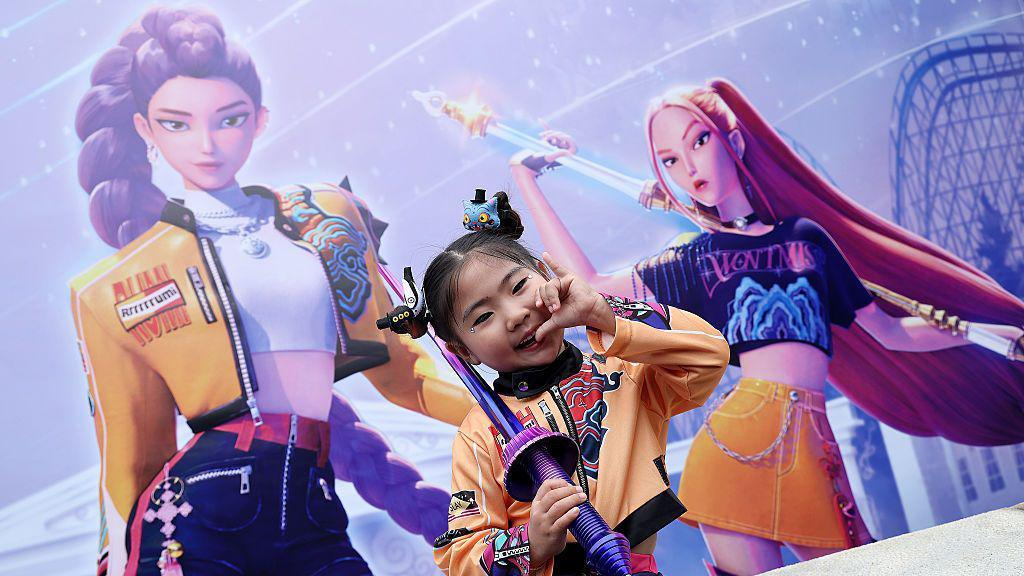
The very foundation of rumi kpop demon hunters character lies in her tragic and terrifying lineage. Born a cambion, she is the offspring of a human and a demon, making her a living contradiction. Her mother, Mi-yeong Ryu, was a legendary K-pop idol and a member of the Sunlight Sisters, the previous generation of demon hunters who protected the world . In a twist of fate that is both romantic and catastrophic, Mi-yeong fell in love with a demon, and from that forbidden union, rumi kpop demon hunters was born. This ancestry is the source of her immense power and her deepest shame, a secret she hides behind the dazzling veneer of pop stardom. This origin story immediately separates Rumi from the typical “chosen one” narrative. She isn’t just chosen; she is born of two warring worlds, destined to be the bridge or the battleground between them.
Growing up without her parents—her mother died shortly after her birth, and her demon father was absent—rumi kpop demon hunters was raised by Celine, her mother’s closest friend and fellow Sunlight Sister . Celine, while loving, instilled in Rumi a profound fear of her demonic heritage. She trained Rumi to be a weapon against the very darkness that flowed through her veins, teaching her to suppress her true nature to protect herself from the world’s judgment. This upbringing created a deep-seated internal conflict. Rumi was taught to hate a part of herself, to view her demonic markings as shameful scars rather than natural traits. As co-director Maggie Kang noted, the character was designed to explore the idea of the “inner demon” made literal; the negative voice we all have in our heads is for rumi kpop demon hunters an actual, physical manifestation that she must battle . This struggle is the source of her emotional vulnerability and makes her journey toward self-acceptance so powerful and relatable.
The Weight of the Crown: Rumi’s Life as the Leader of HUNTR/X
On the surface, Rumi is the epitome of K-pop perfection. As the leader and lead vocalist of HUNTR/X, she is confident, driven, and charismatic. She commands the stage with an energy that electrifies stadiums of adoring fans, and her dedication to her craft is unwavering. She pushes herself and her bandmates, Zoey and Mira, to excel in every performance, whether they are singing on a music show or slaying demons in a gritty alleyway . This duality is the central premise of the film, but for rumi kpop demon hunters, it is a literal life-or-death balancing act. She must maintain a flawless public image to hide the fact that she is part of the very evil she is sworn to fight. The pressure to be perfect is immense, a pressure that voice actress Arden Cho felt was incredibly relatable. “She has to hide her flaws, and she has to be perfect,” Cho explained, noting that this is a cultural expectation she grew up with herself .
rumi kpop demon hunters role as leader also places a heavy burden on her shoulders. She feels responsible for the safety and well-being of her friends, which often leads her to make reckless decisions. Rather than trusting Mira and Zoey with the truth about her lineage, she tries to carry the burden of her secret alone. This protective, self-sacrificial tendency is both her greatest strength and her fatal flaw. She is willing to risk her own life and sanity to protect those she loves, but in doing so, she isolates herself and almost causes the destruction of their group. This stubborn independence, born from a desire to shield others from harm, is a recurring theme in her character development. She must learn that true leadership is not about carrying the weight alone, but about trusting and relying on the strength of the team she has built. Her journey is a poignant reminder that even the strongest among us need support and that vulnerability is not a weakness but a pathway to deeper connection.
The Secret Behind the Voice: The Talents of Arden Cho and EJAE
One of the most fascinating aspects of Kpop Demon Hunters is how the character of Rumi is brought to life through the collaboration of two distinct talents. The speaking voice, full of vulnerability and grit, is provided by the immensely talented actress Arden Cho . Known for her roles in “Teen Wolf” and “Partner Track,” Cho brought a level of emotional depth and nuance to Rumi that is essential to the character’s appeal. Interestingly, Cho initially auditioned for the role of Celine, the mentor, and was surprised when she was cast as the lead . She felt the pressure of stepping into the shoes of a global pop star, questioning if she was “cool enough” to be Rumi. This anxiety proved to be a perfect preparation, as it informed the very core of the character: the struggle to live up to an unattainable standard of perfection . Cho’s performance captures the razor-thin line between rumi kpop demon hunters controlled public persona and the chaos roiling beneath the surface, making her feel like a real person despite the fantastical setting.
On the other side of the coin is EJAE (born Kim Eun-jae), the singer who provides rumi kpop demon hunters soaring, powerful vocals . EJAE is not just a voice; she is a co-writer who helped shape the sound of HUNTR/X. As a former K-pop trainee herself, EJAE brought an authentic understanding of the pressures and rigors of the industry. She understood what it felt like to have to be “perfect” while hiding personal insecurities, and she channeled that experience into her performances . The film’s hit song “Golden,” which topped charts globally, was born from a melody EJAE heard in her head while on the way to the dentist, capturing the very essence of spontaneous creative genius . By separating the speaking and singing voices, the film cleverly mirrors rumi kpop demon huntersinternal split. The spoken word shows her struggles; the singing voice shows her power. This decision allowed the filmmakers to utilize EJAE’s incredible range and intimate knowledge of K-pop stylings to create music that was not only narratively functional but also a genuine chart-topping success, proving that the “rumi kpop demon hunters” phenomenon was as much a musical event as it was a cinematic one.
More Than Just a Pretty Face: Costume Design and Visual Identity
rumi kpop demon hunters visual identity is a masterclass in character design, with her appearance reflecting her inner turmoil and complexity. Her most iconic feature is her brilliant, vivid purple hair, typically styled in a thick mohawk-esque dragon braid that reaches down to her calves . As director Maggie Kang explained, the braid was chosen because it is iconic to traditional Korean hair and gave Rumi a “fun punk-rock silhouette” . This design choice blends traditional Korean aesthetics with a modern, rebellious edge, perfectly encapsulating the film’s fusion of myth and pop culture. She is visually striking, a “classic beauty” with monolid coffee brown eyes and a sand-yellow complexion, designed to be aspirational but also human . The addition of intricate nail art and specific, culturally significant accessories like the norigae (traditional Korean jewelry) shows the incredible attention to detail paid by the design team, who created over 200 costume drawings for the film .
However, rumi kpop demon hunters most telling visual attribute is the one she works hardest to hide: the glowing purple demon patterns that cover her body. These patterns, which resemble ancient, eldritch symbols, glow pink when she is under stress, revealing the secret she so desperately wants to conceal . In moments of extreme emotional duress or when she is tapping into her demonic power, her appearance transforms dramatically. Her left iris shifts from brown to gold with a slitted pupil, and her hands become clawed, foreshadowing the monster she is afraid of becoming . Her costumes, from the stage outfits to her casual wear, are meticulously designed to cover these markings, emphasizing the theme of concealment. It is only in the film’s climactic moments, when she embraces her true self, that she allows these markings to be seen, transforming them from a shameful secret into a visible symbol of her strength. This visual storytelling adds layers of depth to rumi kpop demon hunters character, showing her evolution without needing to rely solely on dialogue.
Musical Weapons and Vocal Warfare: The Power of the Voice
In the world of rumi kpop demon hunters, music is not just an art form; it is a weapon of mass destruction—specifically, a tool to fight demons. The premise of the film hinges on the idea that the girls’ singing voices create a magical barrier known as the Honmoon, which can seal away demonic threats . Rumi, as the group’s lead vocalist, wields the most powerful weapon of all: her voice. This concept is a brilliant narrative device that seamlessly merges the characters’ dual identities. Their concerts serve as both entertainment and a strategic cover for their demon-hunting activities. The power of rumi kpop demon hunters voice is symbolic of her purpose; she is born to sing, to fight, and to inspire.
The story arc of rumi kpop demon hunters losing her voice is a powerful metaphor for her internal struggle. When she is suppressing her demonic nature and living in fear, her powers become unstable. Her voice, the very symbol of her strength, begins to fail her . It is only when she begins to accept her heritage, embracing the truth of what she is, that she can reclaim her vocal power. This culminates in the film’s climactic performance, “What It Sounds Like,” a soaring anthem that is far more than a catchy tune. As executive music producer Ian Eisendrath described, this song is rumi kpop demon hunters battle cry. She is “singing in her most authentic, rich, not-squeaky-clean K-pop sound,” saying to the world, “This is my voice without the lies. This is who I really am” . This moment demonstrates that the ultimate demon she was fighting was not an external monster, but her own self-doubt.
Shattering Stereotypes: The Inspiration Behind the Film
The creation of rumi kpop demon hunters was fueled by a desire to subvert expectations and create a new kind of female hero. Director Maggie Kang was driven by a frustration with the lack of complex and silly female characters in animation. “I had been in so many animation writing rooms where we were scared to make female characters really silly, and that was always frustrating,” she said . This led her to create a group of heroes who could be “funny and silly and goofy and messy, as well as cool and aspirational and sexy” . rumi kpop demon hunters is the embodiment of this vision. She is as comfortable lounging on the couch in her pajamas as she is performing in a stadium, making her feel authentic and relatable. She isn’t a perfect, untouchable icon, but a person with complex desires and fears.
The film also broke new ground by centering on a Korean-inspired narrative with an all-Korean cast of characters. Kang drew on Korean mythology, incorporating elements like the grim reaper and traditional weapons such as rumi kpop demon hunters Saingeom, known as the Four Tiger Sword . This cultural specificity was integral to the film’s identity, creating a unique visual and narrative palette that stood out in the mainstream animation landscape. By integrating authentic K-pop sensibilities with a heartfelt story about identity, the film resonated with global audiences who were starved for something fresh and new. The “rumi kpop demon hunters” craze is a testament to the power of authentic representation, showcasing that stories rooted in specific cultures can have universal appeal when they are told with genuine heart and creativity.
The Rivalry and Alliance with Jinu
rumi kpop demon hunters story is not just about her own internal struggles; it is also defined by her complex relationship with Jinu, the leader of the rival boy band, Saja Boys . Jinu is a mirror to Rumi, a character who challenges her to see the gray area between good and evil . He represents a temptation to embrace the demonic side of her nature, but also serves as a catalyst for her ultimate self-acceptance. Their dynamic evolves from rivals to reluctant allies to something deeper, with Jinu ultimately playing a crucial role in helping Rumi control and weaponize her demonic powers. He becomes the “sparring partner” she needed to stop running from her identity, directly confronting her with the uncomfortable truth that she cannot be defined by a single label .
The Art of the First Impression: Rumi’s Introduction
One of the most effective ways to understand rumi kpop demon hunters power is to look at how she is introduced to the audience. In an era where “first impressions” matter, her appearance in the film is a masterclass in storytelling. Her first appearance comes when HUNTR/X comes together as a trio for the first time, showcasing their tight-knit bond and unified purpose . This establishes her as part of a cohesive unit, but the film is careful to later isolate her inner turmoil. Later, when she reveals that she is part demon during a performance of “Golden,” the song is not just a spectacle; it serves as a confession and a turning point . The choice to reveal her identity during a performance is perfect for a character who uses her art to hide and express her truth. It is a high-stakes moment that highlights the constant tension in rumi kpop demon hunters life: the public stage, where she is most vulnerable, is also where she must be the strongest.
Reclaiming the Narrative: Rumi’s Climactic Confrontation
The climax of KPop Demon Hunters revolves around rumi kpop demon hunters confrontation with Celine, the mentor who raised her. For years, Celine taught Rumi to see her demonic heritage as a curse to be cured. This culminates in Rumi’s powerful declaration: “No. No more hiding. No more lies” . In this moment, she finally rejects the shame that has been imposed upon her and reclaims her agency. Rumi’s arc is not about being “cured” of being half-demon; it is about accepting the “beauty in the broken glass,” as EJAE put it . She learns that by embracing both halves of her identity, she can harness her inherited power as a force for good. The film ends not with Rumi being “fixed,” but with her loving herself as she is, marking a significant departure from the typical “chosen one” narrative where the hero must purge their dark side. Her story is a powerful reminder that our imperfections are not our weaknesses; they are what make us unique.
Character Depth and Emotional Complexity
rumi kpop demon hunters emotional depth is what elevates KPop Demon Hunters from a fun action flick to a genuinely impactful story. Beneath her confident leadership and dazzling stage presence lies a deep well of insecurity. She describes her demonic heritage as a “shame,” a secret that began “to destroy the one thing that gave me a purpose: my voice” . This admission reveals that the core of her identity crisis is not just about her powers, but about her creativity. She fears that her tainted blood will corrupt the one pure thing she has to offer the world. The psychological toll of hiding such a significant part of herself is palpable, and it gives her arc a tragic weight. She is not just a superhero defeating villains; she is a young woman battling clinical depression and self-loathing, which makes her victory over her inner demons all the more satisfying and triumphant.
The Power of Friendship and Found Family
While rumi kpop demon hunters is the central character, she cannot succeed alone. Her bandmates, Mira and Zoey, form the heart of her support system . While she initially tries to push them away to protect them from her secret, their unwavering loyalty and love are what ultimately save her. They represent the “found family” trope, proving that bonds forged through shared experience are stronger than blood ties. Mira, the energetic and stylish member, and Zoey, known for her distinctive smile, each bring their own flavor to the group, but they are united in their determination to fight for Rumi . When Rumi’s secret is revealed, the group faces a breaking point, but their friendship endures. They help Rumi understand that the fear of judgment was a greater monster than any demon she had faced. The success of rumi kpop demon hunters is a testament to the power of these relationships, proving that even the most powerful heroes need people in their corner who love them unconditionally. This aspect of the story ensures that the “rumi kpop demon hunters” phenomenon has a lasting emotional resonance, as fans identify with the strength of the bonds on display.
Rumi’s Legacy and the Future of the Franchise
The global success of KPop Demon Hunters has cemented rumi kpop demon hunters place as a modern icon. With over 236 million views and record-breaking soundtrack sales, the film has secured a sequel, which is already being touted as a massive win for Netflix . The journey of Rumi and HUNTR/X is far from over. Given that the first film focused deeply on Rumi’s internal journey and backstory, the sequel is expected to expand the world, introduce new threats, and further develop the characters of Mira and Zoey. The story of “rumi kpop demon hunters” is a testament to the power of a well-crafted character. Rumi is more than just a character in a movie; she is a role model who embodies the struggle to be your true self in a world that demands perfection.
This purple-haired heroine has become a symbol of hope and resilience. She teaches us that we don’t have to be “cured” of who we are to be valuable. Her legacy is one of breaking barriers, defying expectations, and singing your truth at the top of your lungs, even if your voice shakes. The recognition of the film at the Oscars and its consistent presence in the Top 10 for over a year indicate that rumi kpop demon hunters story is not a passing fad but a cultural milestone that has left an indelible mark on popular culture.


